history
The Olive Festival takes place in Malpica do Tejo, a parish in the municipality of Castelo Branco, and spans three days of celebration dedicated to tradition and the authentic flavours of the region. Its roots are tied to the agricultural importance of the olive and olive oil in this land, a vocation that has accompanied Malpica do Tejo for a long time, in an area of longstanding farming practice and deeply rooted cultural traditions.
The festival is a community gathering around what the land provides: there are local products and crafts, live music and traditional cuisine. More than a fair, it is a moment when the village celebrates the fruit that shapes its calendar and its economy, keeping alive the spirit of sharing between those who live here and those who visit.
Malpica do Tejo is a parish with an ancient history, with traces dating back to the Neolithic period and archaeological finds from the Roman era. In the sixteenth century it was under the Order of Christ, and its proximity to the river Tejo early on favoured agricultural life — the same land that still today gives meaning to the Olive Festival.
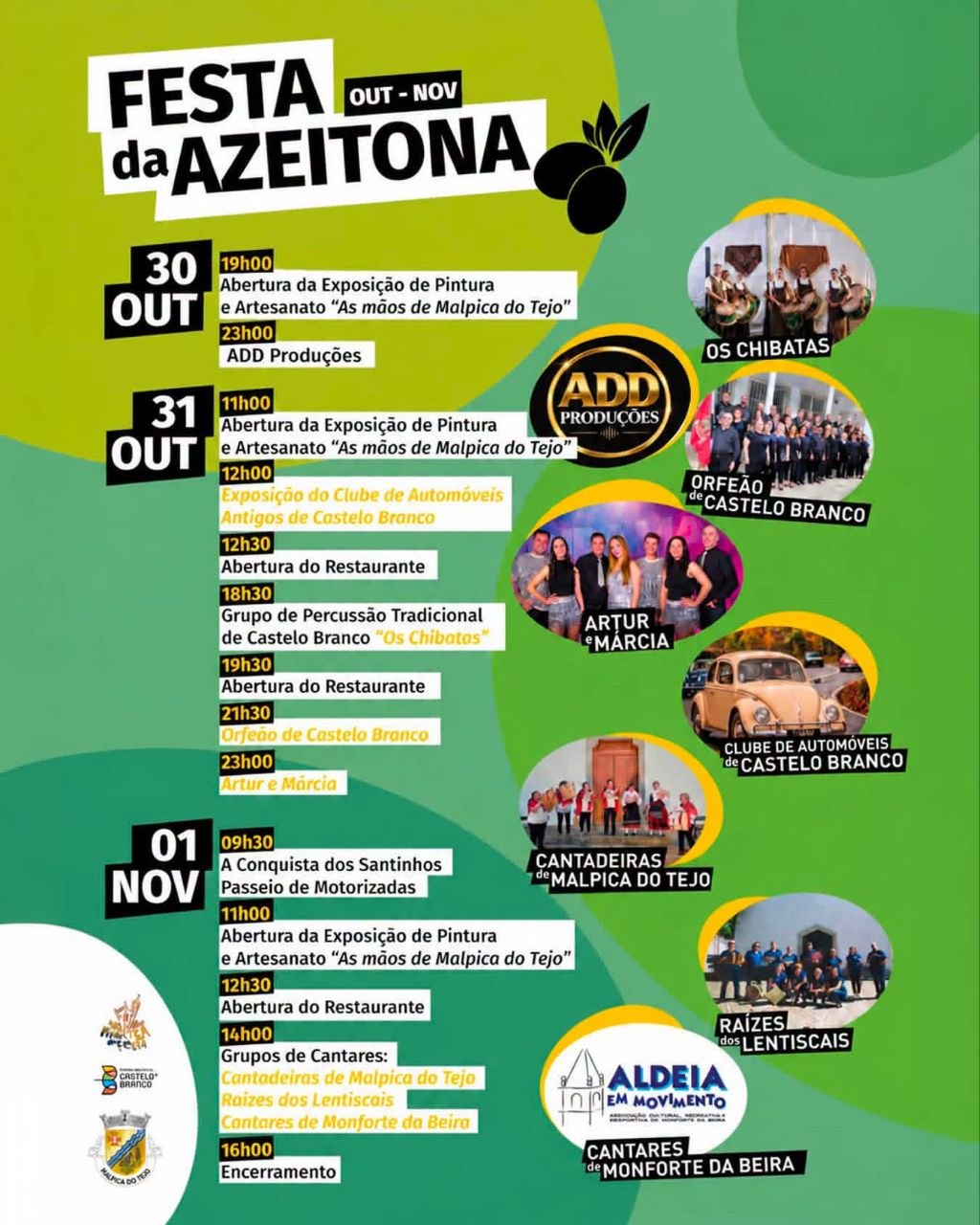
programme
Friday 30 October
-
19h00
Opening of the Painting and Crafts Exhibition 'As mãos de Malpica do Tejo'
-
23h00
ADD Produções
Saturday 31 October
-
11h00
Opening of the Painting and Crafts Exhibition 'As mãos de Malpica do Tejo'
-
12h00
Exhibition by the Castelo Branco Vintage Car Club
-
12h30
Restaurant Opening
-
18h30
Castelo Branco Traditional Percussion Group 'Os Chibatas'
-
19h30
Restaurant Opening
-
21h30
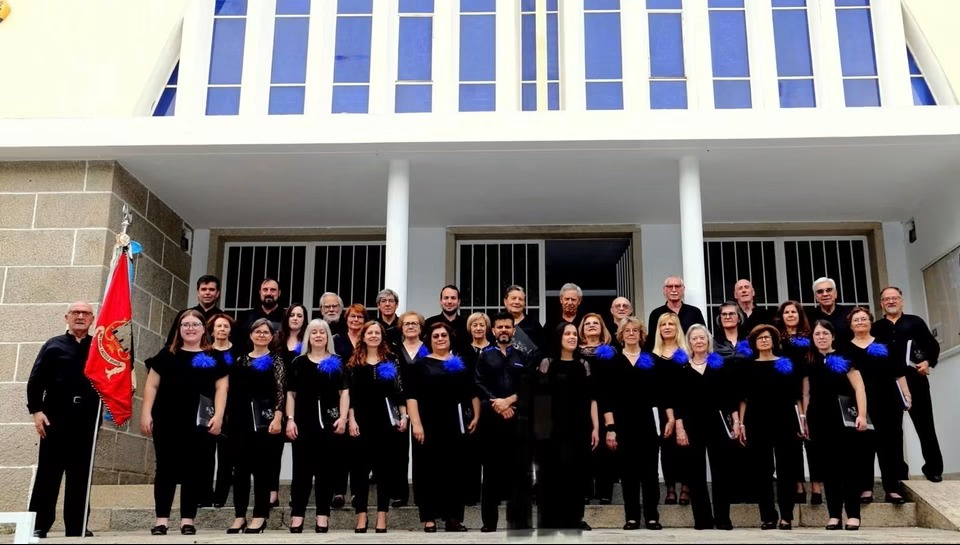
Orfeão de Castelo Branco
-
23h00
Artur e Márcia
about the place
Malpica do Tejo, in the municipality of Castelo Branco, is a land where the past can be felt underfoot, with traces spanning millennia, from the Palaeolithic to the Roman presence. Its sixteenth-century church, the chapels and the Ponte Velha over the River Ponsul tell stories of faith and of people deeply rooted in the land. Olive growing profoundly shapes the local identity, and the flavours of olive oil are woven into the life of the village. At the table, dishes such as Miga de Peixe, bucho and spicy cheese reveal a genuine, unhurried cuisine. A land small in number, but vast in memory.
reviews and comments
No comments or reviews yet.